
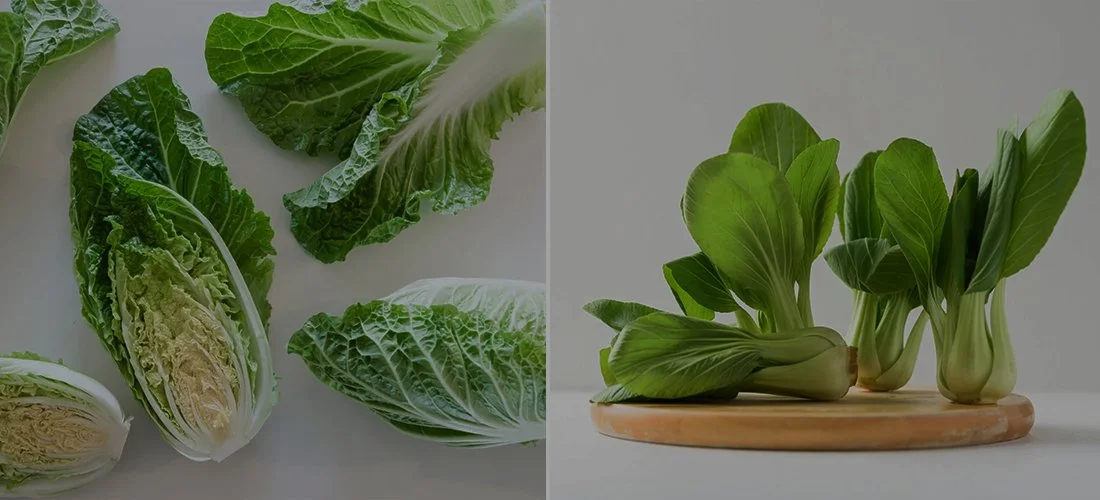
Choosing between napa cabbage and bok choy can change the flavor and texture of your entire dish.
At Hitchcock Farms, growing both vegetables has given us a close-up look at what sets them apart in the field and in the kitchen.
In this guide, we’ll explore how the two compare in flavor, texture, preparation, and the recipes.
Comparing Napa Cabbage and Bok Choy
| Feature | Napa Cabbage | Bok Choy |
|---|---|---|
| Structure (Appearance) | Tightly packed oval heads with pale green leaves | Thick white stalks and deep green leaves |
| Flavor / Texture | Crunchy texture; mild and slightly bitter when raw, sweetens when cooked | Earthy, peppery flavor with a soft, tender texture |
| Nutrition (per 100g) | 13 calories, 1g protein, 1.2g fiber, 35mg calcium, 235mg potassium | 20 calories, 1g protein, 1.3g fiber, 62mg calcium, 228mg potassium |
| Seasonal Availability | Fall through late winter | Spring and fall |
| Shelf Life | Up to two weeks | About five days |
| Storage | Wrap in plastic and refrigerate | Store in a mesh bag or wrapped in a damp towel in the refrigerator |
| Best For | Kimchi, salads, stir-fries | Stir-fries, roasting, soups, salads |
Napa Cabbage: A Tender Veggie With a Satisfying Crunch
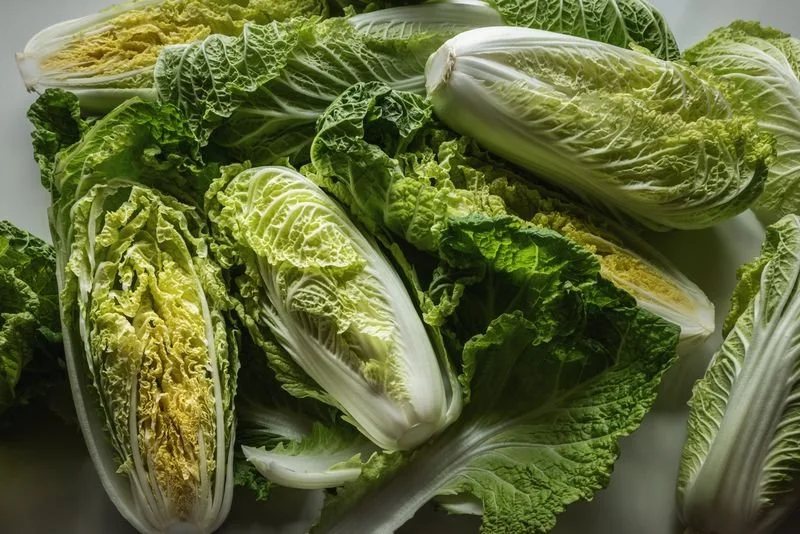
Napa cabbage's mild, sweet flavor and tender crunch make it a fan favorite for slaws, stir fries, salads, and especially kimchi.
Origin
Napa cabbage originated in China in the 14th century.
The cruciferous vegetable could have developed naturally by chance, or it may have been intentionally created as a hybrid of other plants.
Over the next few hundred years, napa cabbage was introduced to Japan and Korea. By the 19th century, it was also a popular vegetable throughout Europe and America.
Contrary to popular belief, this leafy veggie isn't named for Napa Valley in California. Instead, it's named after the Japanese word for vegetable leaves.
Varieties
There are numerous varieties of napa cabbage grown across the world. Here are some of the most popular types:
Michihili: The most common variety of napa cabbage, michihili heads are known for their frilly green leaves. They can grow up to 18 inches in length.
Hilton: These cabbages have medium-sized heads, crinkly leaves, and a mild and sweet flavor.
Wong bok: Wong bok cabbage has densely packed leaves. Heads usually grow to about 12 inches and weigh around 7 pounds.
Minuet: This is a much smaller variety of napa cabbage, with heads that grow to about 9 inches and weigh 2 to 3 pounds.
Rubicon: Rubicons are known for their deep green leaves and broad ribs. They weigh around 5 to 7 pounds and grow to about 12 inches in length.
Prep & Cooking
When buying napa cabbage, select a head that feels heavy and has tightly packed leaves.
A fresh head of napa cabbage should have a subtle, fresh fragrance.
You can store napa cabbage in plastic wrap in the crisper drawer of your refrigerator. If possible, store the head intact until you're ready to cook it to maximize its lifespan.
To prepare napa cabbage, remove the core by cutting a V shape into the stem. Then, chop the cabbage into quarters, wash the leaves with cold water, and dry them in a salad spinner.
The white inner ribs of the cabbage can add a nice crunchy texture to your recipes, but they take longer to cook than the leaves. If you want to use both the ribs and the leaves in your dish, separate them and cook the ribs for longer.
Napa cabbage leaves cook very quickly, so you should add them to your dish near the end of its cooking time.
Recipe Ideas
Napa Hearts With Thai Peanut Dressing
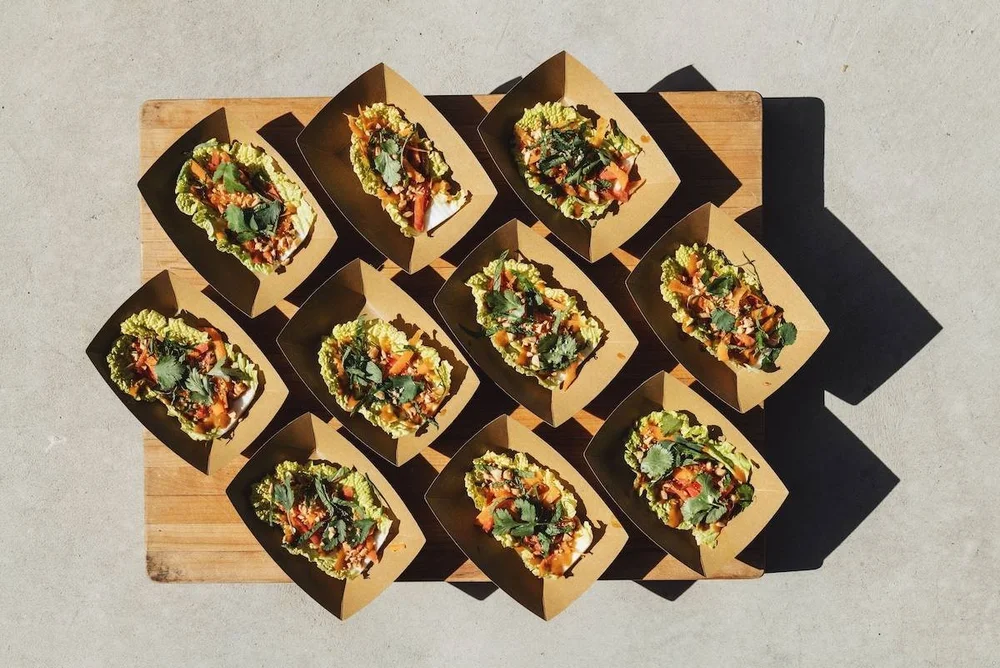
This Asian-inspired recipe is a healthy and delicious appetizer that's perfect for a summer cookout.
Fresh vegetables, crunchy nuts, and flavorful herbs come together in crisp, tender cabbage shells.
Make the peanut dressing by combining peanut butter, garlic, Sriracha, brown sugar, soy sauce, vinegar, oil, salt, and lime juice in a blender.
Remove the outer leaves of the napa cabbage heart and use the smaller inner leaves as shells.
Drizzle the peanut dressing on the cabbage shells and fill them with grated carrots, cilantro, mint, and chopped roasted peanuts.
Kimchi
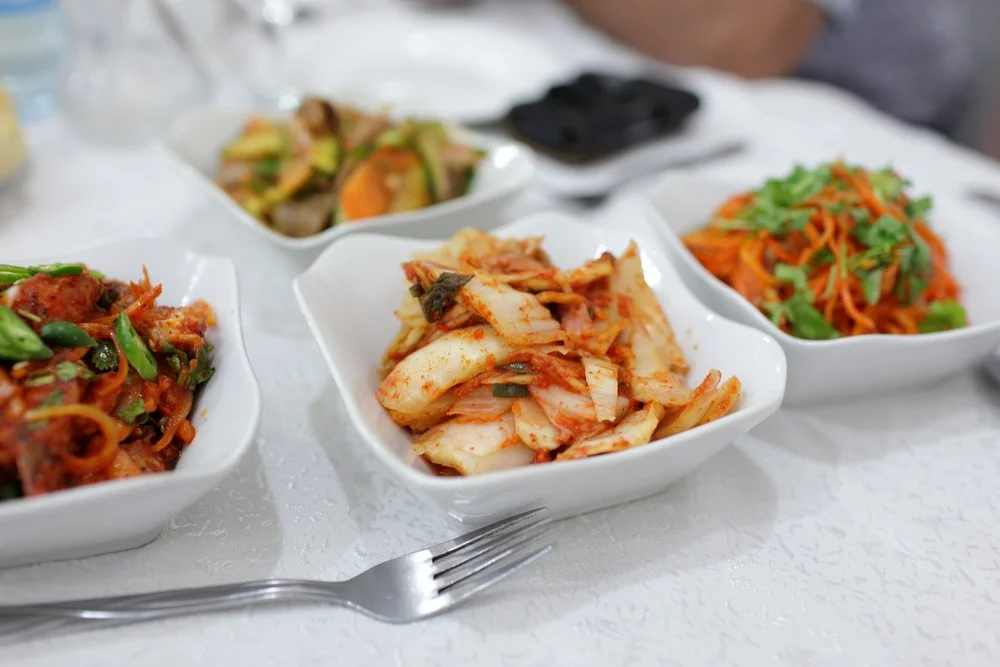
Kimchi is the quintessential napa cabbage dish.
This Korean staple can be added to fried rice, spread on a burger, used as a garnish on noodles, or enjoyed on its own as a tasty side dish.
Soak sliced napa cabbage in a bath of saltwater for three to four hours.
Prepare the kimchi paste by combining minced radishes, carrots, garlic, ginger, and onion with salt, red pepper flakes, and your other chosen seasonings.
Rinse and drain the cabbage and stuff the kimchi paste between the leaves.
Place the kimchi in airtight containers and store it in a cool place for one to two days before moving it to the refrigerator for fermentation.
Napa Cabbage Frittata
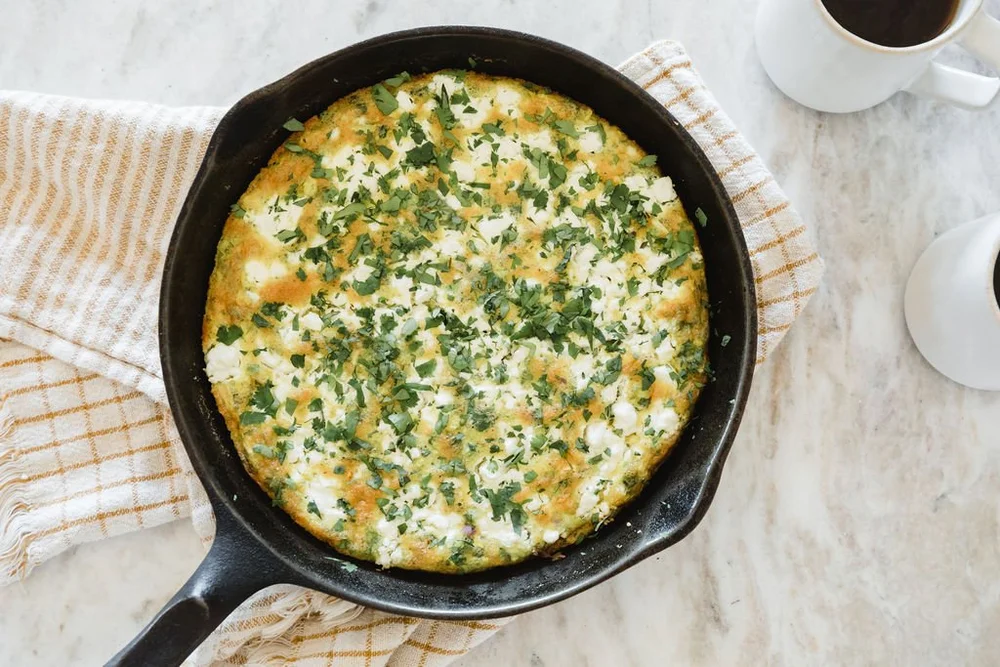
Savory, protein-packed frittata makes an excellent hearty breakfast or brunch.
This recipe uses napa cabbage and green onions to add extra flavor, crunchy texture, and fiber to the dish.
Combine eggs, chopped napa cabbage, onions, cilantro, garlic, and seasonings in a large bowl.
Coat a cast-iron skillet with butter and pour in the egg mixture, letting it cook undisturbed for five minutes.
Add crumbled feta and transfer the skillet to the oven for 20 minutes.
Napa Cabbage Chicken Salad
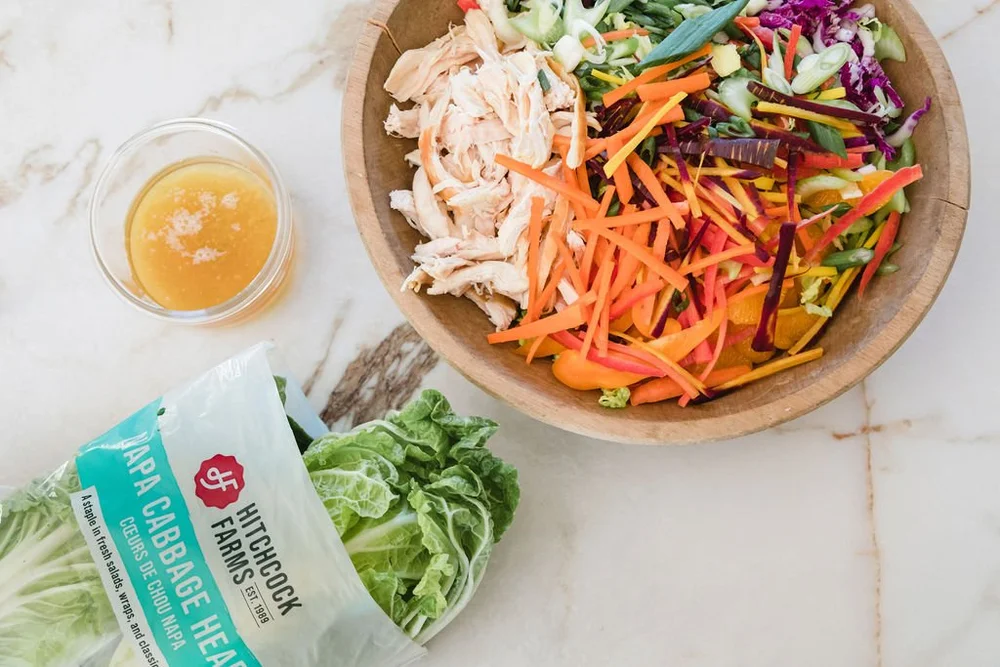
The whole rainbow is represented in this chicken chopped salad recipe.
You can enjoy it on a sandwich or wrap, or dig right in with a fork.
Prepare a vinaigrette by combining vinegar, oil, sugar, ginger, clove, and garlic.
Combine cooked shredded chicken with chopped napa cabbage, bell pepper, mandarin orange, carrots, celery, green onions, and wonton strips.
Top the salad with the vinaigrette dressing.
Bok Choy: A Mild and Versatile Green
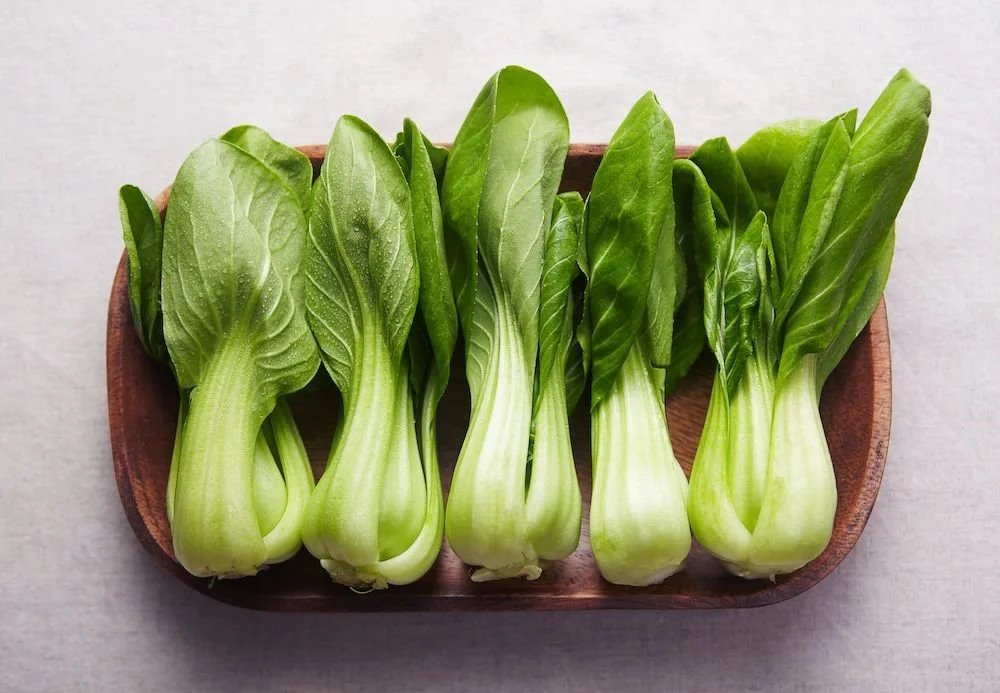
Bok choy, another beloved variety of Chinese cabbage, adds rich greenery and nutritional punch to soups, noodles, stir fries, and more.
Origin
Though it looks more like a leafy green, bok choy is actually classified as a type of cabbage.
The vegetable, which has origins in 5th-century China, is the oldest of the Asian greens. Its name translates to "white vegetable," referring to its white stems.
Bok choy was brought to the United States by Chinese immigrants in the 19th century.
Today, it's enjoyed across the globe but is still known as a staple in Asian cooking.
Varieties
While there are many varieties, the three most popular are large bok choy, baby bok choy, and Shanghai bok choy.
Large bok choy: The classic variety of bok choy, this vegetable has large, crunchy white stems and dark green leaves.
Baby bok choy: Baby bok choy is the same species as regular bok choy, but it's harvested when the plant reaches about 6 inches of height. Because of its younger age, it's sweeter and softer than large bok choy.
Shanghai bok choy: This variety has light green, flat stems and spoon-shaped leaves. Like baby bok choy, Shanghai bok choy is typically harvested young, resulting in a sweeter flavor and softer texture.
Prep & Cooking
When shopping for bok choy, look for firm stalks with pure white stems and bright green leaves.
Bok choy has a fairly short shelf life, so you should enjoy it soon after you buy it.
To prep it, cut off the tip of the stem and wash the stalk and leaves in cold water.
Like napa cabbage, the stems and leaves of bok choy have different cooking times, so you should separate them before cooking.
Bok choy stalks add a great crunch to salads and stir-fries. The leaves make a delicious addition to stir-fries and soups.
You can store bok choy in a mesh bag or a damp towel in the refrigerator. Avoid keeping the veggie in a plastic bag, as this can cause it to wilt faster.
Recipe Ideas
Roasted Bok Choy
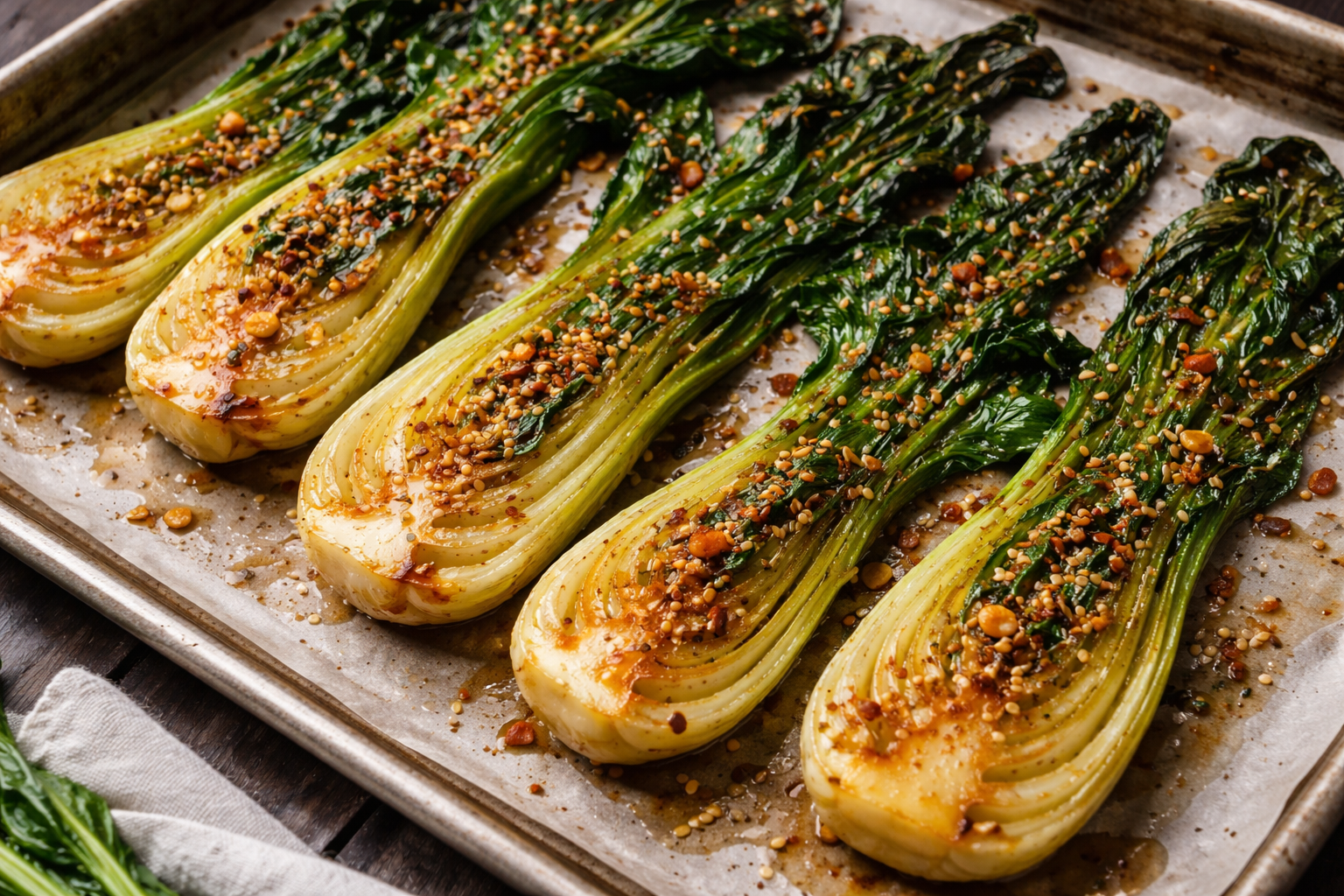
This roasted bok choy makes a wonderfully savory and tender side dish to practically any protein.
Whisk together a sauce of minced garlic, sesame oil, tamari, rice vinegar, maple syrup, and ginger.
Slice the bok choy in half lengthwise, place it on a baking sheet, and brush the sauce over the vegetables.
Roast at 400 degrees for 12 minutes or until lightly browned.
Bok Choy Stir Fry
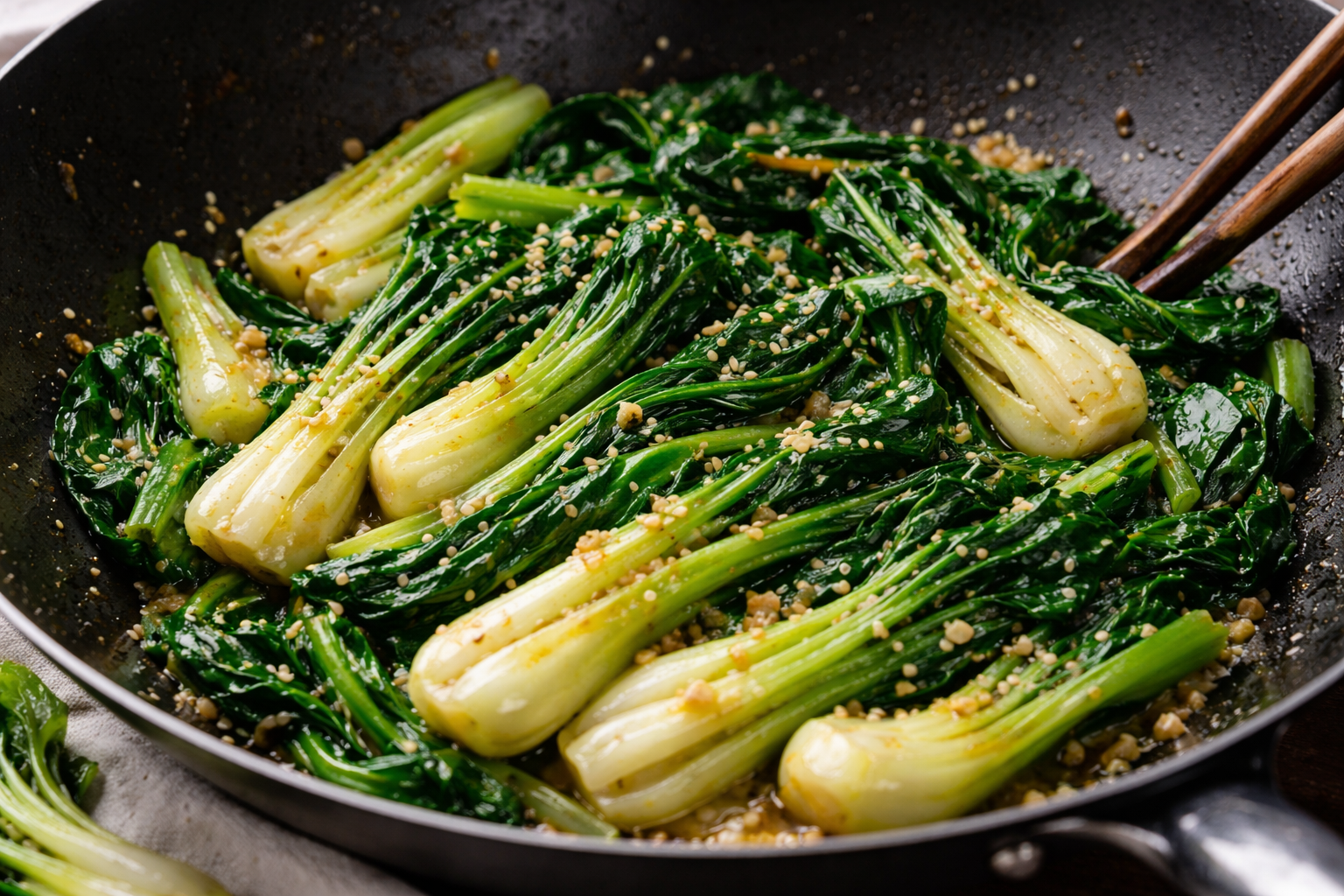
Stir fry is one of the best ways to enjoy bok choy. With this versatile, customizable meal, you can add all of your favorite veggies and proteins.
Cut the bok choy in half lengthwise, and separate the leaves and stalk.
Add oil to a wok on high heat, and add the minced garlic and bok choy stalks. Add the leaves shortly after adding the stalks.
Cook for six to eight minutes, then add salt, sugar, and chicken bouillon.
Sesame Almond Bok Choy Salad
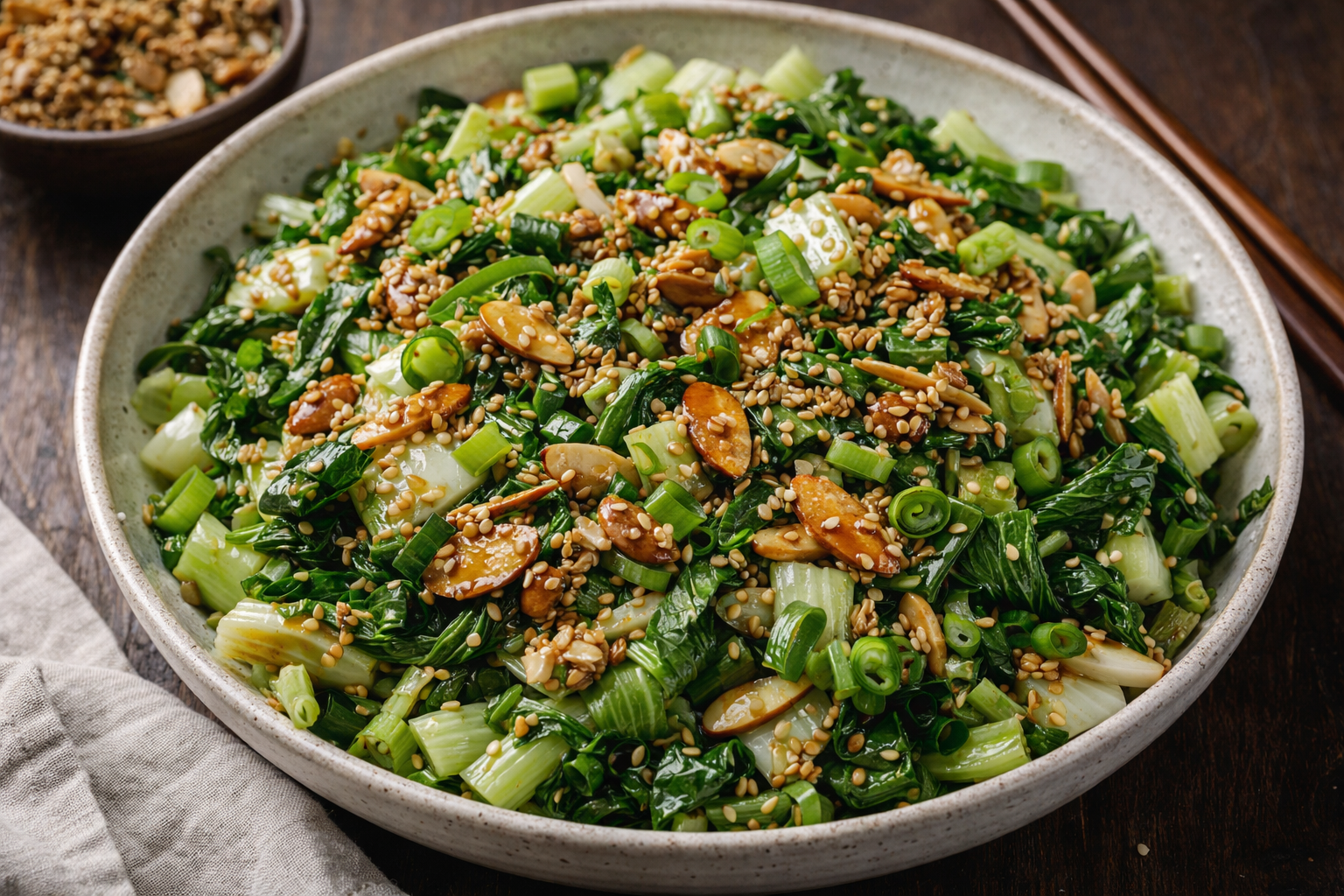
This salad offers a delicious blend of flavors and textures by combining raw bok choy with a sweet and salty mixture of sesame seeds and almonds. It can be enjoyed warm or cool.
Cook slivered almonds and sesame seeds over medium heat until golden brown, then remove from the pan.
Add sugar to the pan and stir until liquefied, then add the almonds and sesame seeds along with sea salt. Stir until well mixed and remove from heat.
Prepare the dressing by bringing rice vinegar, soy sauce, oil, and sugar to a boil and adding sliced green onions.
Combine chopped bok choy with the sesame-almond mixture, and top with the dressing.
Napa Cabbage and Bok Choy: Two of Our Favorite Greens
We love cooking with both napa cabbage and bok choy, and we hope you do, too.
Our team at Hitchcock Farms is proud to provide high-quality, sustainably grown napa cabbage and bok choy so that home chefs and foodservice professionals can develop innovative new recipes and perfect their old favorites.
FAQ
-
Napa cabbage can be a good substitute for bok choy in stir-fries, soups, or other cooked dishes.
The texture of napa is somewhat firmer, and the cabbage takes a little longer to cook, but both greens provide a similar flavor and crunch.
-
Napa cabbage and bok choy are both very healthy. Bok choy is slightly higher in calcium, but both have similar levels of fiber and protein.
-
Napa cabbage is the most similar vegetable to bok choy when used in soups and stir-fries.
Choy sum and Swiss chard are also very close to bok choy in flavor and texture.

