
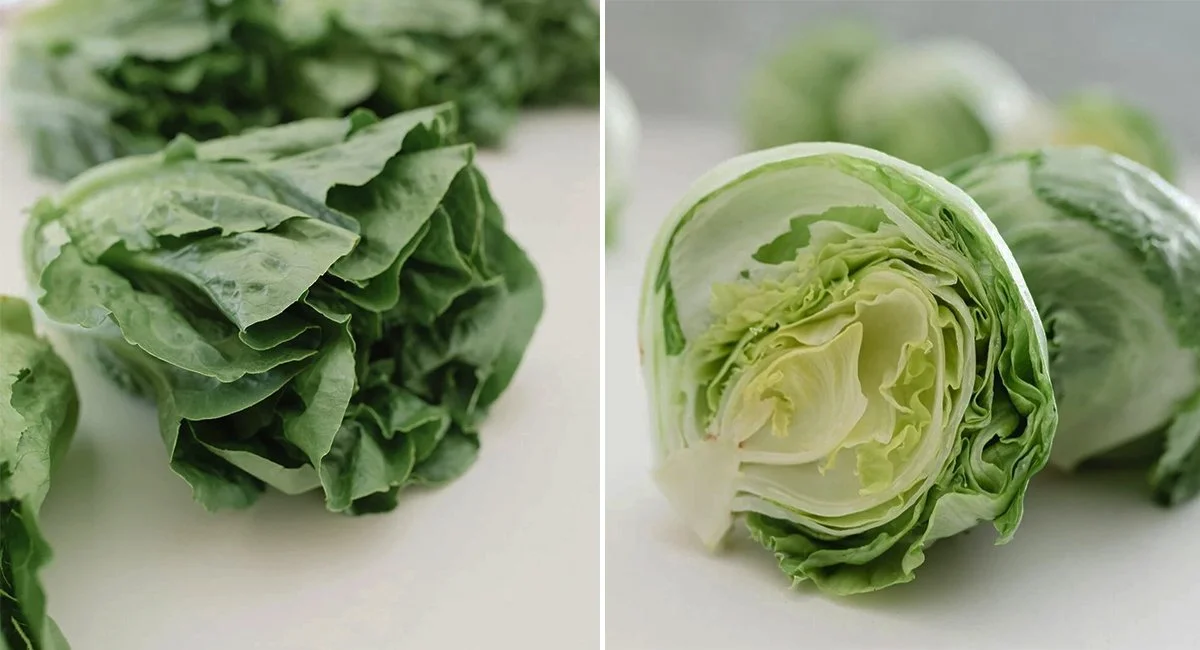
Romaine and iceberg are two of the most popular lettuce varieties.
At Hitchcock Farms, growing both varieties has shown us exactly what sets them apart in the field and on the plate.
In this blog, we're breaking down the key differences between romaine and iceberg so that you can choose the best option for your recipes.
Comparing Romaine and Iceberg Lettuce
| Category | Romaine | Iceberg |
|---|---|---|
| Structure (Appearance) | Elongated heads with loosely packed leaves | Tightly packed heads of light green leaves |
| Flavor / Texture | Mild crunch, earthy, slightly sweet | Crispy and crunchy |
| Nutrition (per 1 cup) | 8 calories, 0.6g protein, 1g fiber, 15mg calcium, 116mg potassium | 8 calories, 0.5g protein, 0.7g fiber, 10mg calcium, 78mg potassium |
| Seasonal Availability | Year-round, peak in winter | Year-round, peak late spring to early fall |
| Shelf Life | Up to 20 days in refrigerator | Up to 12 days in refrigerator |
| Storage | Airtight container in refrigerator | Loose plastic bag in refrigerator |
| Best For | Salads, wraps, grilling | Salads, slaws, sandwiches, lettuce cups |
Romaine: A Robust Favorite
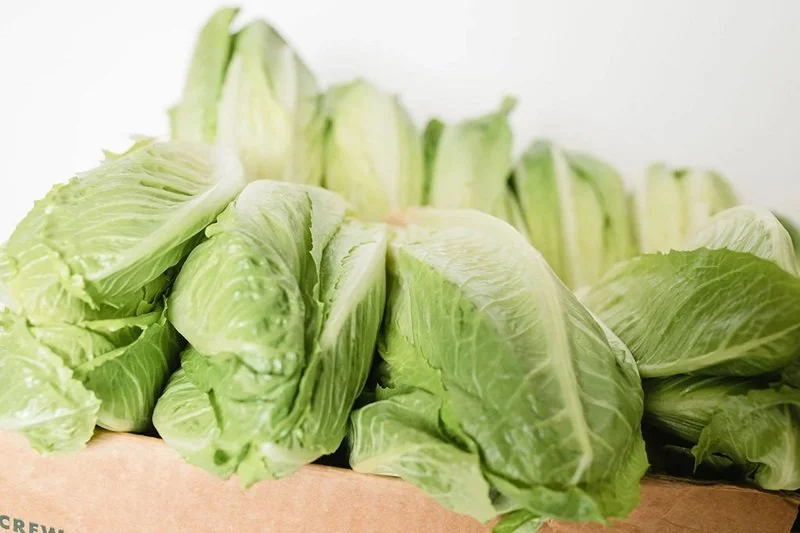
Also known as cos lettuce, romaine has an elongated head with loosely attached leaves.
It's one of the most versatile and beloved varieties of lettuce, making its way into cuisines all across the globe.
Origin
Dating back to ancient Egypt, romaine is one of the oldest varieties of lettuce.
The leafy green spread throughout the Mediterranean region, making its way to Greece and Italy. It's speculated that it received the name "cos" from the Greek island of Kos.
Today, most of America's romaine is grown in California and Arizona.
It's one of the heartiest, most heat-resistant lettuce varieties and can be grown year-round.
Varieties
Hitchcock Farms introduced romaine hearts in the 1990s for chefs and home cooks who prefer the flavorful inner leaves of the romaine head.
Romaine hearts are lighter in color and crispier than the outer leaves, making them ideal for salads and lettuce wraps.
Prep & Cooking
When shopping for romaine, look for firm heads with a deep green color. Avoid any heads with leaves that look brown or droopy.
Separate the romaine's outer leaves from the hearts to thoroughly wash the head of lettuce.
You can store romaine in the refrigerator in an airtight container.
Romaine is highly versatile, so it can be roughly chopped for salads, shredded for garnishes, or kept whole for lettuce wraps.
You can even grill romaine lettuce for a healthy summer side dish.
Recipes
Caesar Salad

Caesar salad is a beloved romaine classic. This satisfying recipe can be enjoyed as a side dish or topped with a protein to make it a hearty main.
Prepare the croutons by coating bread cubes in olive oil and baking at 425 degrees until browned.
Make the dressing by mixing anchovy paste, mayonnaise, Worcestershire sauce, garlic, lemon juice, salt, and pepper.
Toss chopped romaine hearts and croutons with the dressing and top with parmesan.
Romaine Heart Fattoush Salad

This fattoush salad, made with romaine hearts and feta, pays homage to the leafy green's Mediterranean roots.
Tear pita bread into pieces, coat with olive oil, and bake at 400 degrees until golden and crispy.
Combine chopped romaine hearts, red onion, cucumbers, cherry tomatoes, parsley, mint, and feta.
Coat the salad with a dressing made of garlic paste, salt, lemon juice, olive oil, and heavy cream.
Romaine and Apple Salad
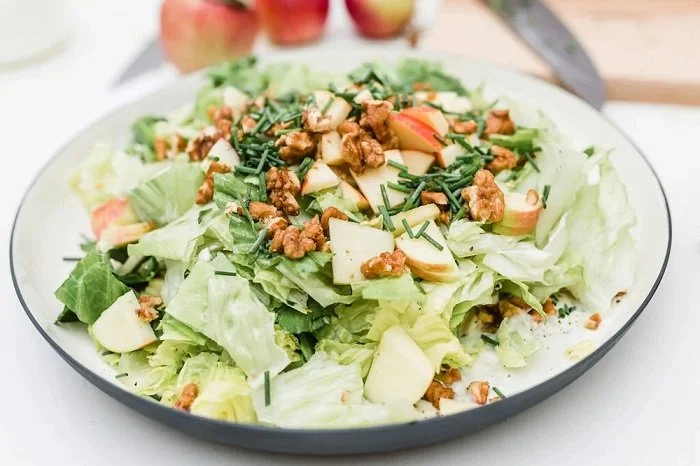
Perfect for autumn, this simple yet unique salad offers a delicious blend of sweet and savory flavors.
Prepare the blue cheese dressing by mixing mayonnaise, crumbled blue cheese, sherry vinegar, sour cream, buttermilk, and salt.
Place a dollop of dressing on the plate. Then, slice romaine heads lengthwise through the middle and place them on top of the dressing.
Add sliced apples, chopped candied walnuts, and chopped chives.
Iceberg: A Crisp and Refreshing Staple
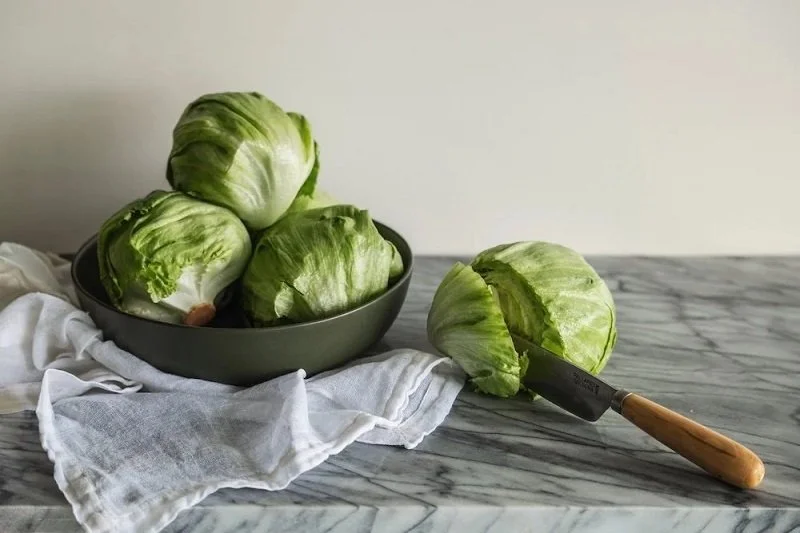
Also known as crisphead, iceberg is the most widely produced type of lettuce by volume in the United States. More than 1.6 million tons are harvested every year in California.
Iceberg is known for its tightly packed leaves, each with a white rib and ruffled ends.
Its crisp, refreshing texture is perfect for summer salads.
Origin
Iceberg lettuce is named for its pale color and crunchy texture.
It was introduced by the Burpee Company in 1894, making it a fairly new variety of lettuce.
The compact heads were packed in ice, stored in refrigerated rail cars, and shipped across the country from California.
One of the iceberg's best claims to fame is the wedge salad, which first appeared in print in a 1916 cookbook. By the 1920s, the salad was a popular side dish in restaurants across the country.
Varieties
Baby iceberg, introduced by Hitchcock Farms in 2005, is a popular variety of iceberg for wedge salads, lettuce cups, and more.
As its name suggests, a baby iceberg is smaller in size than a traditional iceberg.
It boasts a sweeter flavor, too, making it a standout in a wide variety of recipes.
Prep & Cooking
When shopping for iceberg lettuce, look for light green heads with firm, tightly packed leaves.
You can store it in a loosely tied plastic bag in the refrigerator. Hold off on washing the lettuce until you're ready to eat it.
To maximize the crispness of your iceberg, soak the head in ice water before preparing it.
Heads of iceberg are tightly packed, but you can easily remove the core by whacking the head against the kitchen counter to dislodge the leaves.
You can also remove the core with a knife by cutting about an inch into the bottom of the lettuce. Then, you can cut the head into quarters and slice or shred the leaves.
Recipes
Steakhouse Wedge Salad
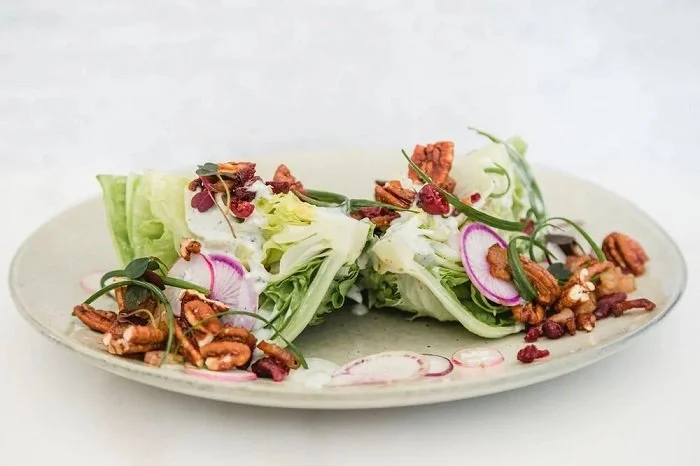
This classic wedge salad is bursting with flavor and texture.
Crispy iceberg, savory bacon, and tart cranberries combine to form a delicious and exciting dish.
Mix together a dressing of Roquefort cheese, buttermilk, mayonnaise, lemon juice, salt, and pepper.
Cook bacon in a skillet until brown and crispy.
Quarter a head of baby iceberg, and top each quarter with chopped bacon, sliced radishes, candied pecans, dried cranberries, and sliced green onions.
Chipotle Steak Lettuce Cups

Iceberg's thick and crunchy leaves make excellent lettuce cups, a great substitute for bread or wraps for carb-conscious diners.
This Southwestern-inspired recipe packs tons of flavor, protein, and fiber into crispy lettuce cups.
Coat flank steak in a chipotle marinade and chill for at least four hours.
Prepare the salsa by mixing black beans, corn, diced serrano chilis, cilantro, red onion, salt, and lime juice.
Sprinkle steak with salt and cook in a cast-iron pan until medium rare. Slice into strips.
Fill lettuce cups with steak, sliced bell pepper, salsa, and cotija cheese.
Veggie Sandwich

A veggie sandwich loaded with crunchy greens is the perfect healthy lunch for a hot summer day.
Prepare pickled red onions by bringing red wine vinegar, sugar, and seasonings to a boil and pouring the mixture over sliced red onions. Store in an airtight container.
Chop golden beets, coat with oil and salt, and roast at 400 degrees until fork-tender.
Assemble the sandwich by layering iceberg lettuce, cucumbers, avocado, and beets on bread topped with herb mayo.
Embracing Health With Leafy Greens
Both romaine and iceberg are healthy, refreshing, and delicious ingredients for salads, sandwiches, and more.
At Hitchcock Farms, we're committed to supplying the highest quality leafy greens so that chefs and home cooks continue to find inspiration in the kitchen.
FAQ
-
Romaine is somewhat more nutritionally dense than iceberg lettuce, but iceberg is still a healthy green.
What's most important is that you incorporate greens into your diet that you enjoy eating.
-
Iceberg can be a great substitute for romaine when you want a crisp and crunchy texture, like for chopped salads or lettuce wraps.
-
Every type of lettuce has its own nutritional strengths.
Generally, dark greens like kale, spinach, and romaine pack the most punch.

