
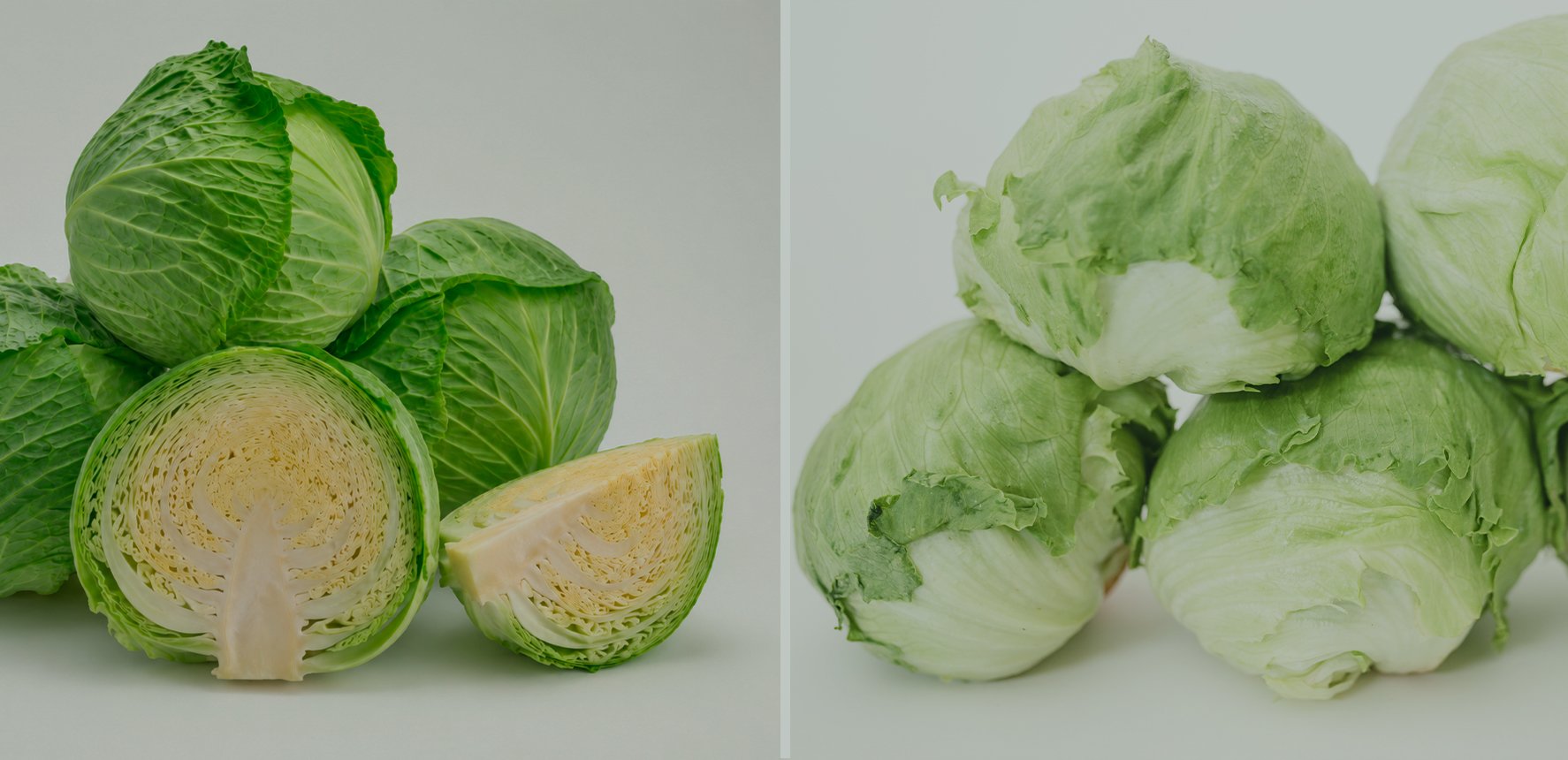
Cabbage and iceberg lettuce might look very similar, but there are a lot of differences between the two greens.
If you're not sure which leafy green is right for your recipes, we are here to help.
At Hitchcock Farms, we have decades of experience as a leading produce grower in California.
In this blog, we're breaking down the similarities and differences between cabbage and iceberg lettuce.
Cabbage and Iceberg: Green Heads With Different Properties
| Category | Cabbage | Iceberg Lettuce |
|---|---|---|
| Structure (Appearance) | Densely packed heads of varying colors | Tightly packed heads of pale green leaves |
| Flavor/Texture | Crunchy texture, peppery and earthy flavor | Crispy, juicy texture and mild, slightly sweet flavor |
| Nutrition | Per 1 cup: 18 calories, 2g fiber, 1g protein, 2mg iron, 2mg calcium | Per 1 cup: 5 calories, 1g fiber, 1g protein, 1mg calcium, 2mg iron |
| Seasonal Availability | Fall through spring | Peak season in May and June |
| Shelf Life | 2 weeks | 1 week to 10 days |
| Storage | Store in a refrigerator in an airtight container | Plastic wrap or airtight container in the refrigerator |
| Best For | Slaws, salads, stir-fries, soups | Salads, sandwiches, lettuce cups |
Cabbage: A Staple Green Across the World
Origin
Cabbage belongs to the Cruciferae family of vegetables. This family is named from the Latin word for "cross" because cabbage and other cruciferous veggies have cross-shaped flowers.
Little is known about the origins of wild cabbage. Scrolls from around 1000 B.C. in China reference cabbage as a cure for baldness.
It's believed that cabbage was first domesticated and cultivated in the Eastern Mediterranean region.
Julius Caesar likely brought domesticated cabbage to England, while Silk Road traders carried it to Asia.
Today, cabbage is enjoyed in various forms across the world, but the country that consumes the most cabbage per person is Russia.
Varieties
Many varieties of cabbage are grown and enjoyed around the world, with the most popular including:
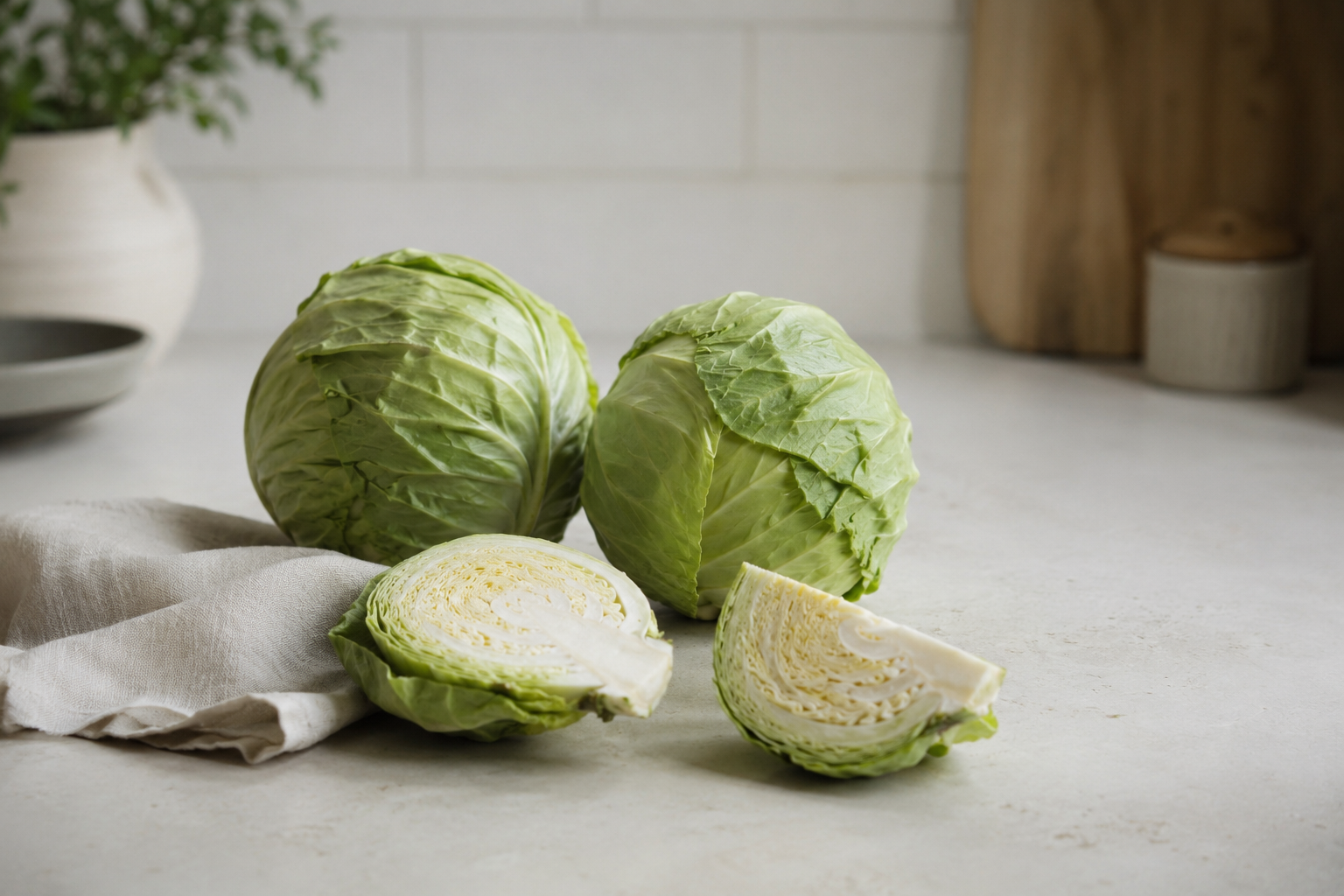
Green: This variety has large, dense heads of green leaves.
Red: Sometimes known as purple cabbage, red cabbage is similar in size and shape to the green variety but has dark, reddish-purple leaves.
Savoy: Savoy cabbage has dark green, frilly leaves that are more loosely packed than the green and red varieties.
Napa: Also known as Chinese cabbage, this oblong variety of cabbage is known for its long, pale green leaves.
Purple Napa: Purple napa cabbage, named for its deep purple leaves, is a sweet and tender alternative to traditional napa.
Prep & Cooking
Cabbage can be prepared and enjoyed in many ways.
When shopping for cabbage, choose heads that feel dense and firm and don't have any yellow or wilting leaves.
You can store heads of cabbage whole and unwashed in your refrigerator. Most cabbage varieties can last for up to two weeks in the fridge.
Before preparing your cabbage, remove the outer leaves.
You can slice, shred, or roughly chop cabbage into wedges to suit your recipe.
To remove the core, make four deep, angled cuts around it and pull it out. Alternatively, you can cut the cabbage in half and carve the core out.
Recipes
Napa Cabbage & Radicchio Salad
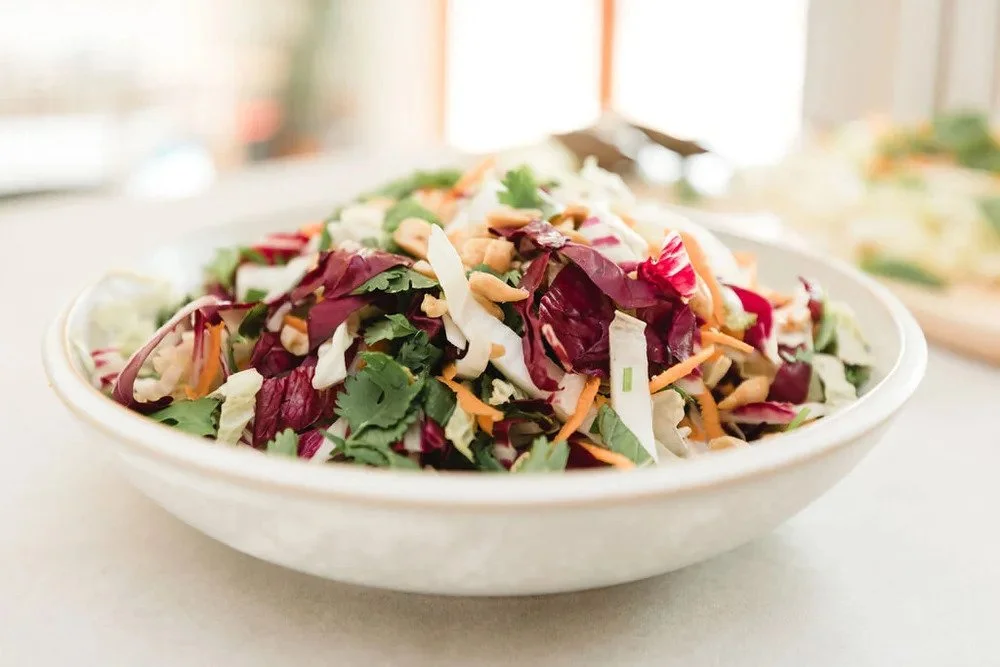
The perfect light lunch or dinner for summer, this salad offers a delicious blend of flavors and textures.
Thinly slice half a head of napa cabbage, half a head of Radicchio, and a large carrot.
Prepare the dressing by mixing unsweetened peanut butter, garlic, Sriracha, brown sugar, soy sauce, vinegar, oil, and lime juice.
Combine the veggies, coat with the dressing, and add fresh cilantro, mint, and chopped roasted peanuts.
Kimchi
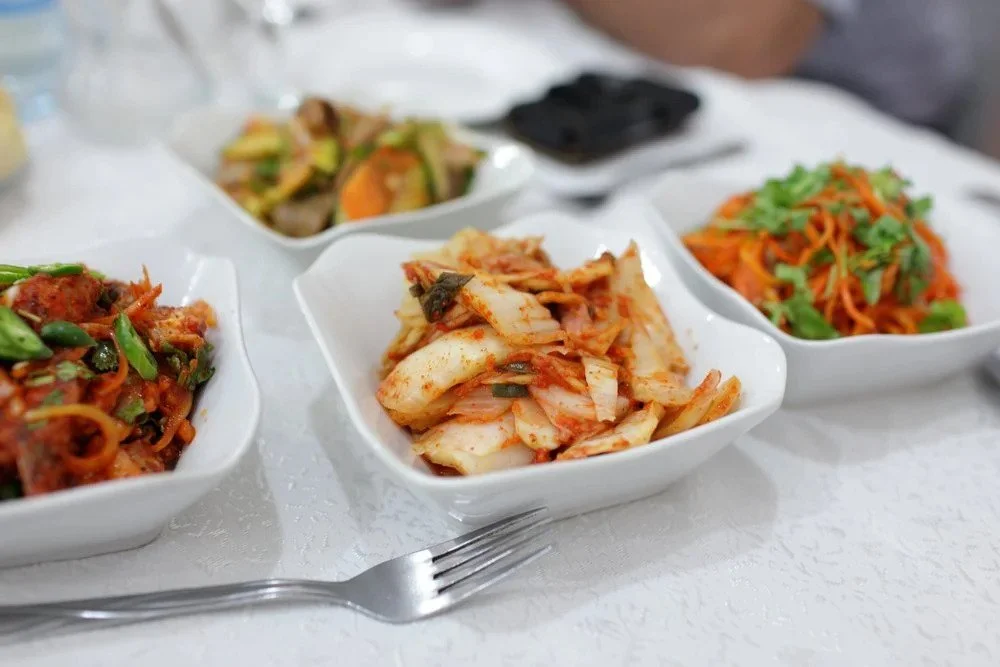
Kimchi is one of the most popular and delicious uses of cabbage. While it can be time-consuming to prepare, nothing beats the taste of fresh, homemade kimchi.
Soak sliced cabbage in saltwater for three to four hours.
Blend together salt, rice powder, red pepper flakes, garlic, ginger, radishes, carrots, and onion to make the kimchi paste.
Rinse the sliced cabbage, dry it, and stuff the kimchi paste between the leaves.
Place the cabbage in airtight containers and store in the refrigerator to ferment it.
Purple Napa Cabbage Salad
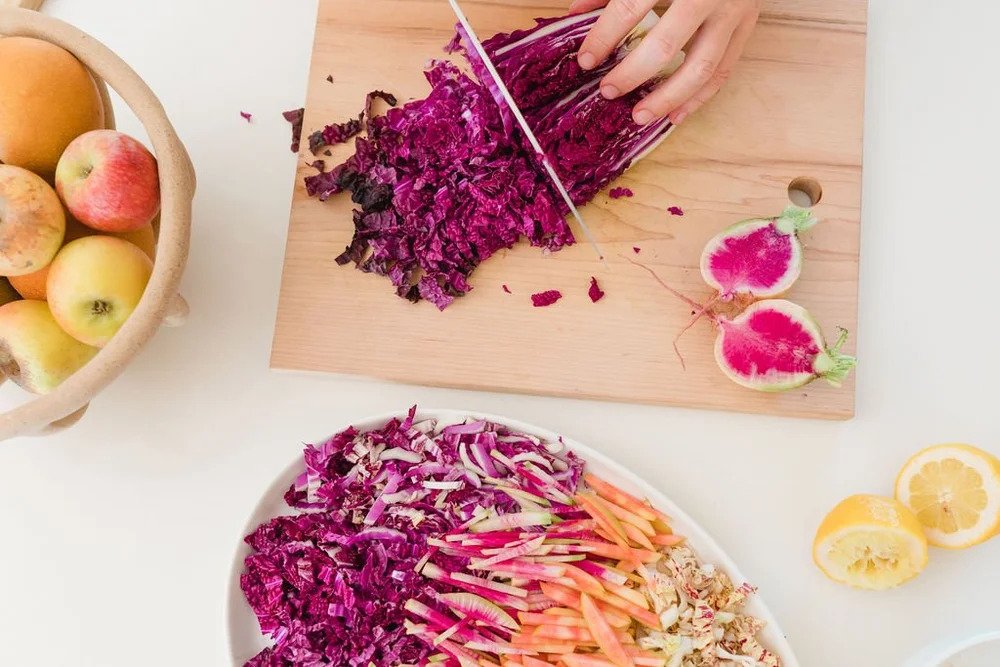
This salad features crunchy cabbage, tender beets, flavorful citrus, and savory burrata cheese, making it a unique and delicious recipe for any occasion.
Prepare the vinaigrette by mixing vinegar, salt, honey, oil, dijon mustard, and shallots.
Combine chopped cabbage, sliced beets, sliced blood orange, sliced cara cara orange, and chopped hazelnuts in a mixing bowl.
Scoop dollops of burrata cheese over the salad, and drizzle with the vinaigrette.
Iceberg: A Crisp and Refreshing Favorite
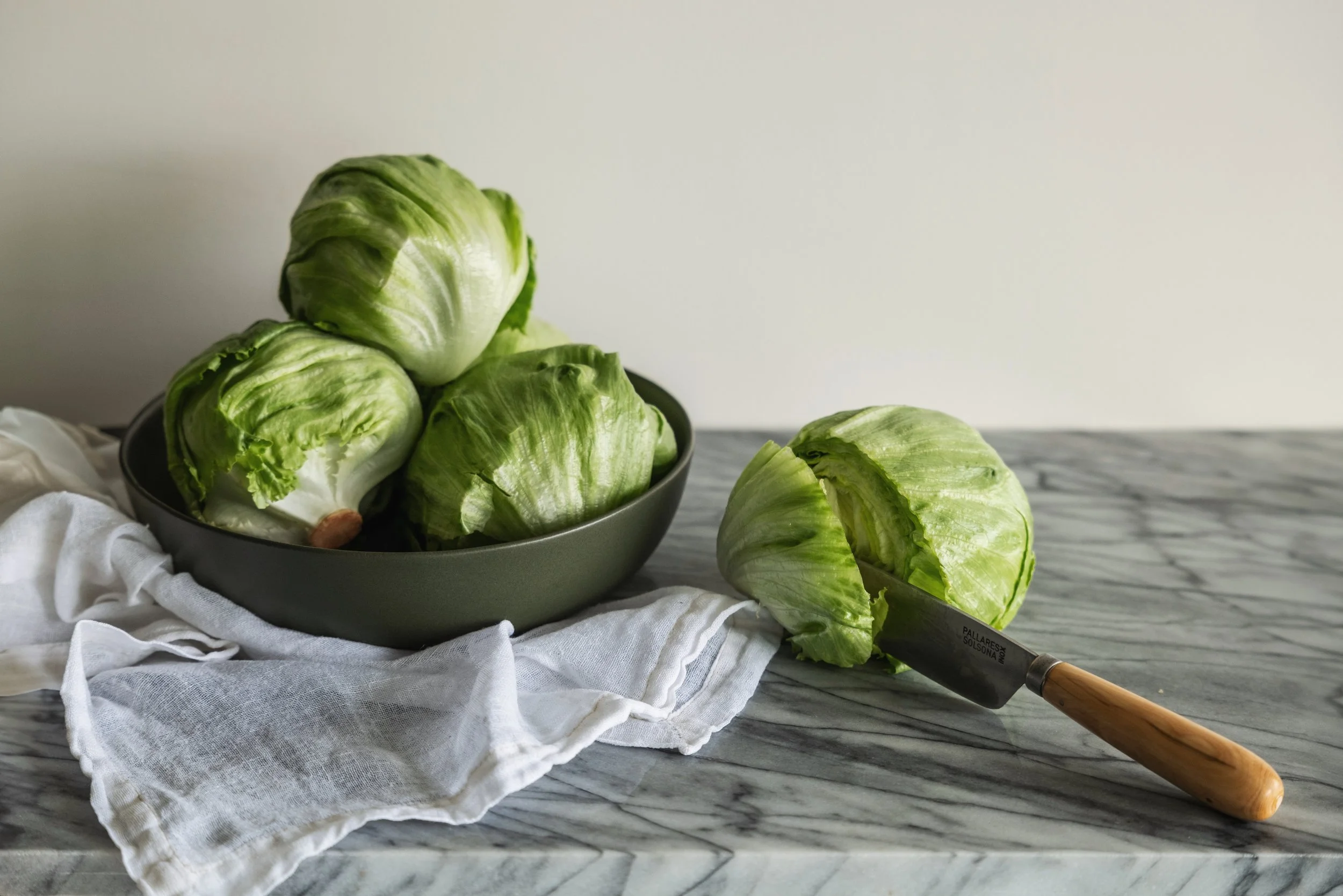
Origin
Iceberg is one of the newer varieties of lettuce, introduced in 1894.
There's some debate on the origin of this lettuce's name. Some accounts report that the leafy green was named from its shipping method, which involved placing it in ice-filled containers.
Others credit its name to its crispy, juicy texture and pale color.
Iceberg is the most widely produced type of lettuce by volume in the United States.
California alone is home to more than 80,000 acres of iceberg lettuce fields.
Varieties
There are many species of iceberg lettuce that are grown throughout the world. Most are fairly similar in texture, size, shape, and color.
Iceberg Babies, which were developed by Hitchcock Farms in 2005, are a miniature variety of iceberg that offers an even sweeter flavor.
Prep & Cooking
When purchasing iceberg, look for heads with tightly packed leaves and a light green color. Avoid heads with wilting, yellow, or brown leaves.
Store iceberg in tightly wrapped plastic wrap to maximize its lifespan.
You should always thoroughly wash iceberg lettuce before preparing it. However, you should wait to wash it until you're ready to prepare it, as the water can cause the leaves to wilt faster.
You can roughly chop, slice, or shred iceberg, or eat the whole leaves in sandwiches or wraps.
To remove the core, whack the head of lettuce against your counter. The leaves will separate as a result of the impact, and you can simply twist and pull the core to remove it.
Recipes
Baby Iceberg Wedge Salad
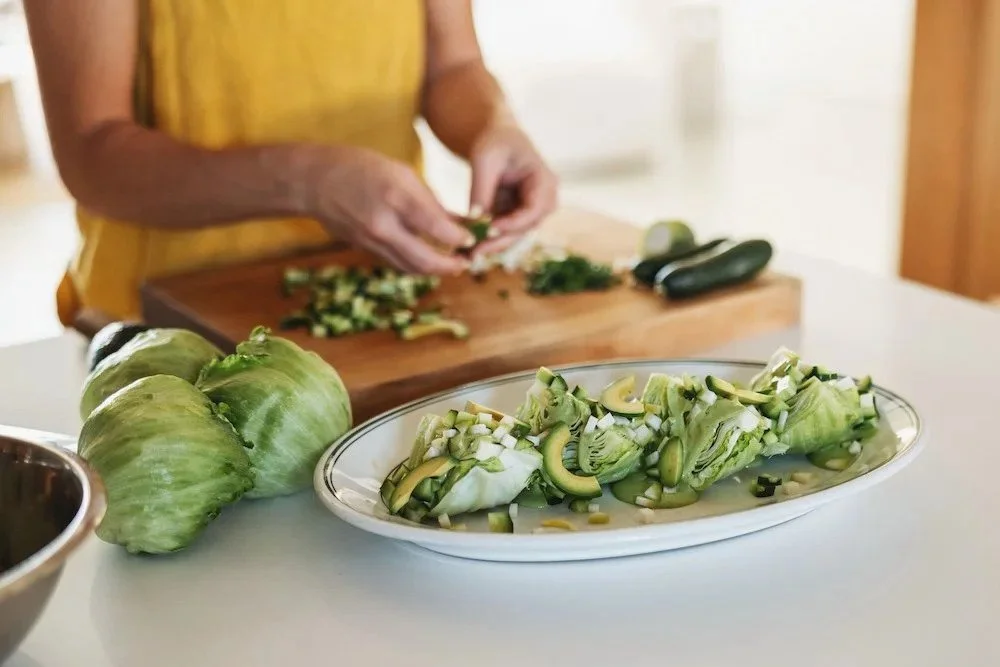
A wedge salad is a classic iceberg lettuce recipe. This version calls for Iceberg Babies to create sweet, bite-sized wedges that are easy to dress and eat.
Mix the dressing by combining Greek yogurt, oil, vinegar, mustard, salt, and herbs.
Quarter two iceberg babies and drizzle the dressing over the wedges until well-coated.
Top the wedges with chopped cucumber, radish, avocado, chickpeas, and chives.
Chipotle Steak Lettuce Cups
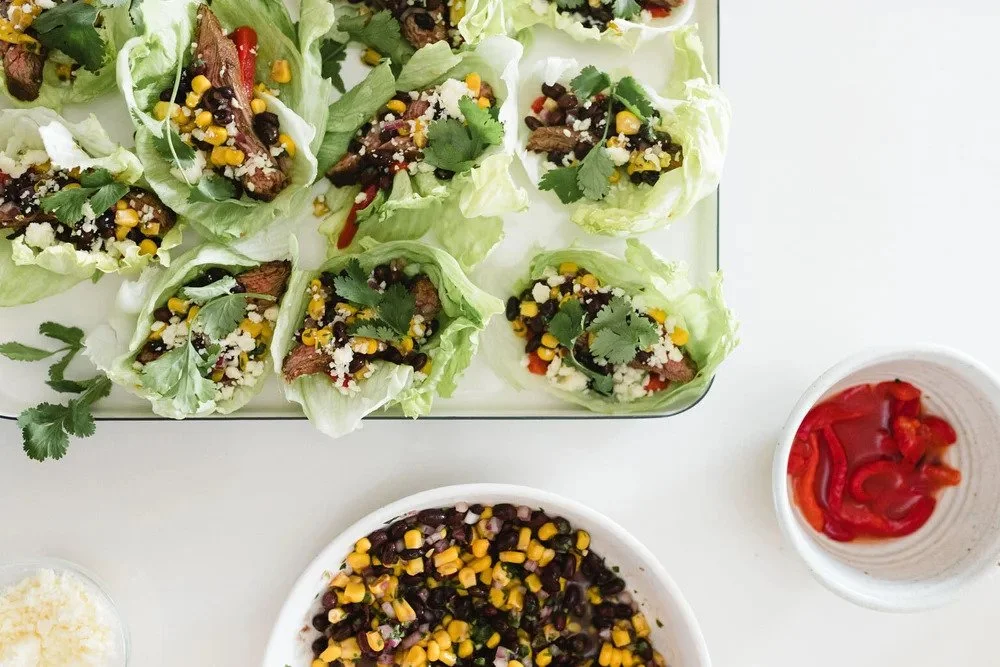
Iceberg is the perfect leafy green for lettuce cups because of its firm, crispy structure. This recipe makes an excellent lunch, appetizer, or finger food for a social gathering.
Coat steak with a marinade made of sautéed garlic, chipotle peppers, lime juice, onion, and oil.
Cook the steak in a cast-iron pan until medium rare, then slice into strips.
Fill baby iceberg lettuce cups with strip steak, red bell pepper slices, cotija cheese, and salsa.
Veggie Sandwich

If you're looking for a simple and refreshing sandwich recipe, you have to try this veggie sandwich with baby iceberg, avocados, and herb mayo.
Prepare pickled onions by boiling vinegar, sugar, and seasonings, then pouring the mixture over sliced red onions in an airtight container.
Coat golden beets in olive oil, then roast until soft and tender.
Prepare the herb mayo by mixing mayonnaise with cloves, dill, and chives, and coat your bread of choice with the spread.
Assemble the sandwich by layering iceberg leaves, avocado, pickled onions, and beets.
Leafy Greens to Suit Any Kitchen
Cabbage and lettuce are both versatile, healthy, and delicious vegetables that suit a wide variety of recipes.
Here at Hitchcock Farms, we love all varieties of lettuce.
Our goal is to provide your home or commercial kitchen with the very best leafy greens.
FAQ
-
Both iceberg and cabbage are highly nutritious, healthy foods to incorporate in your diet.
Cabbage is more nutritionally dense than iceberg, so you'll get a little more bang for your buck.
-
Iceberg is the variety of lettuce that most closely resembles cabbage.
It can be a good substitute for cabbage in salads. Iceberg makes a great lettuce cup or wrap, too.
-
Cabbage has a slightly stronger, more peppery flavor than most varieties of lettuce.

